WINSTON CHMIELINSKI // INTERFACES & EXPERIMENTS
| Creatures | Geometries

I build interfaces that turn attention from the center toward the periphery, the interior, and the invisible forces that shape us. Each one takes one of those forces — the timing inside a voice, the logic under a painting, the slow coming-apart of an object held as value — and makes it something you can see, play, and move through. This is the digital as a way back to ourselves, and to rhythms we've lost touch with.

FILTERED VIEWPORT // --
touches //
Impermanence

Permanent Collection
LIFECYCLE //In Development TIMELINE //2026 (Ongoing)
Decades of decay, in seconds

What remains?

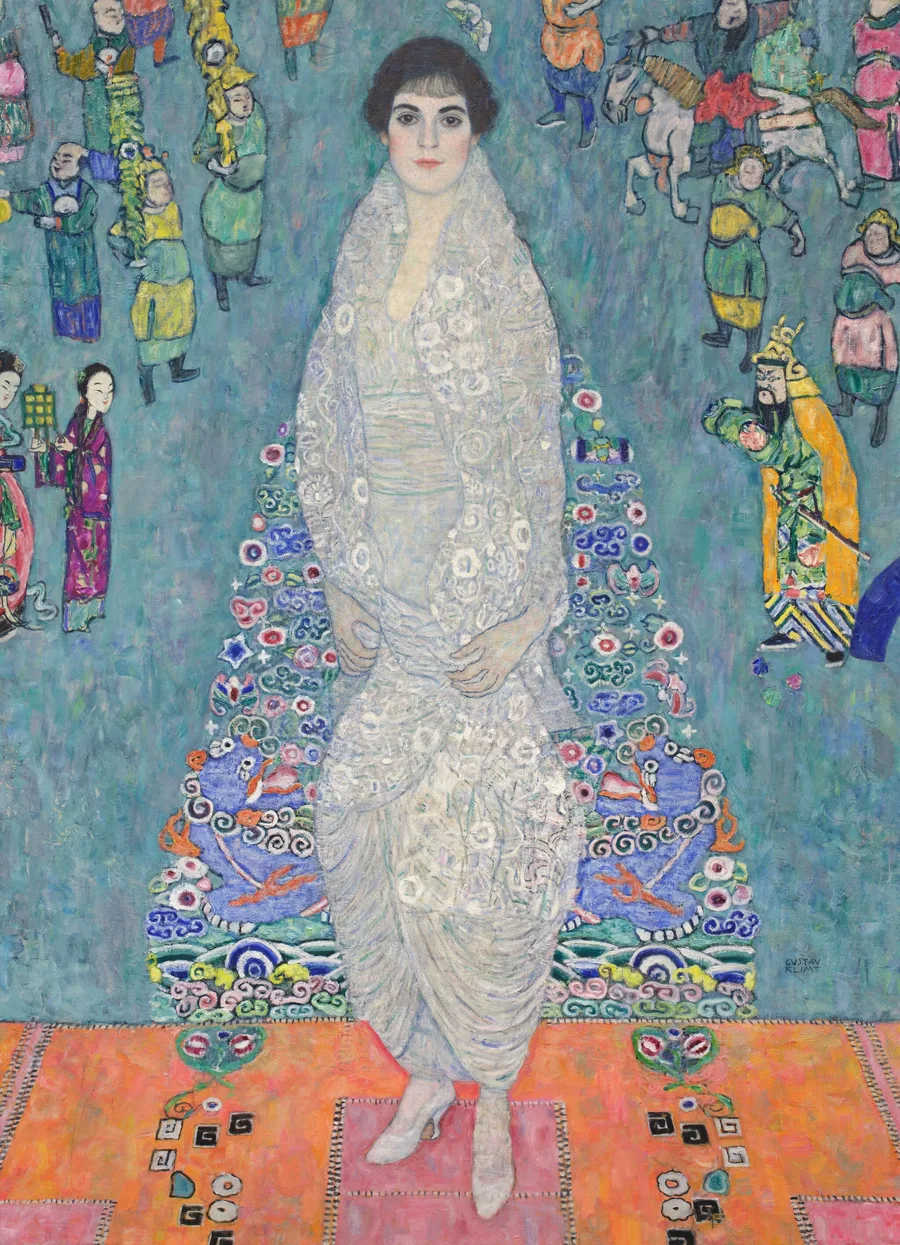
A $200 million painting is as susceptible to decay as anything else — and over time, conservation can turn it into an effigy of itself.

What does it mean that a painting can sell for two hundred million, and that owning it makes you want to stop it from changing at all? A lot of these works end up in freeports, climate-sealed vaults where the art is held as an asset and never shown, kept alive by being kept from life.

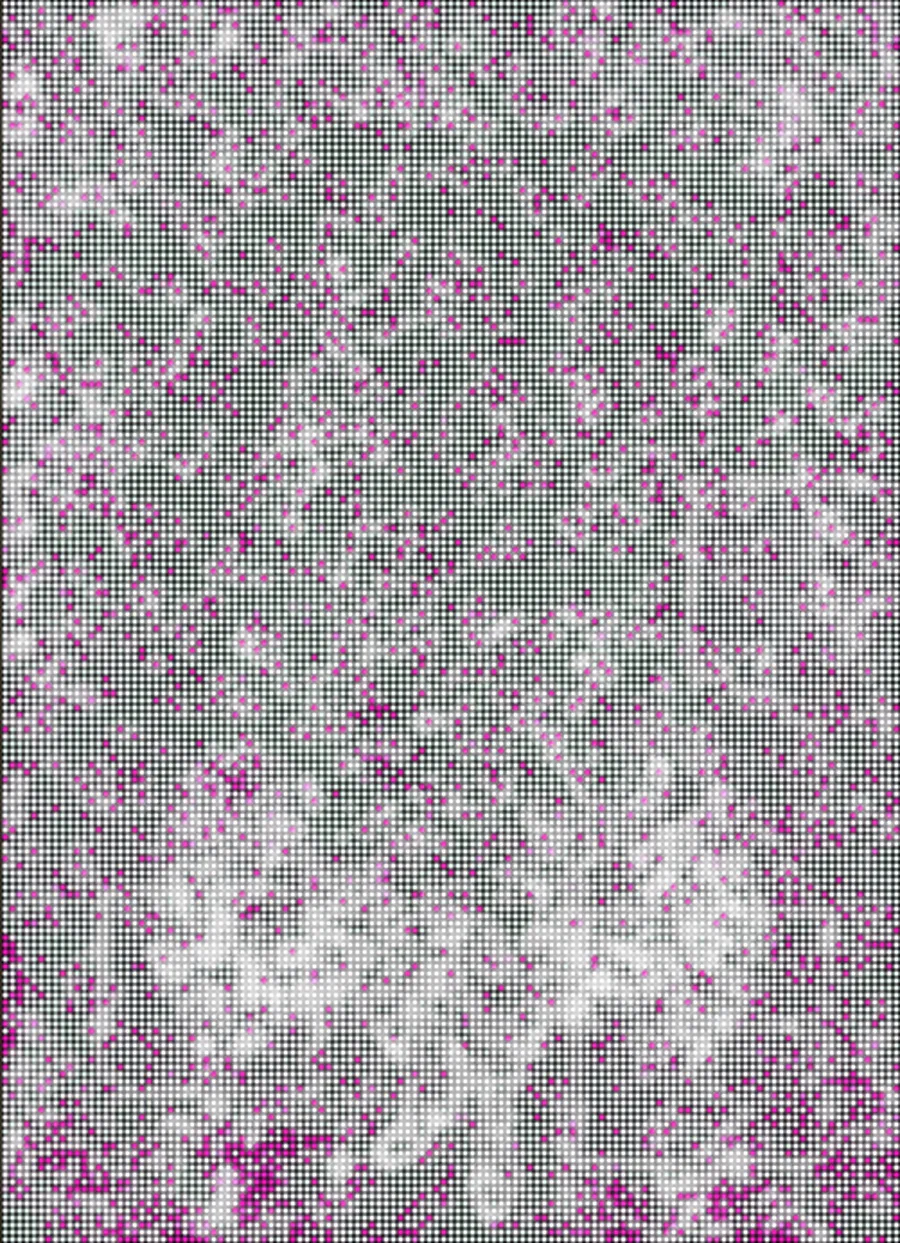
This digital display runs the opposite way. It shows the painting at the scale of the original and models how it actually comes apart — craquelure from the stretcher corners, lead-soap eruption, bleaching, creeping mold — grounded in conservation science (Marion Mecklenburg's studies of how paint films fail). You set the conditions: leave it to the forces, or hit Restore and watch the repair freeze the damage into permanent scars and drop the value to a third.

The questions underneath drive both the market and the way we hold onto things: what does it cost a work to be preserved, and what, in the end, are we really keeping?

Bibliography & Research

01 / MECKLENBURG, MARIONThe Meaning of Mechanical Properties of Paintings (1991)
Paint films fail first at the corners, locked to the stretcher, as the support swells and shrinks with humidity. In the work: craquelure begins in the corners and spreads as cellular stress fracture.
02 / GOETHE, J. W. VONTheory of Colours (1810)
Colour arises at the boundary where light meets darkness; the two are poles of one phenomenon. In the work: the abstracted decay palette is a polar form of the original, colours drawn from darkness set against colours drawn from light.
03 / BRANDI, CESARETheory of Restoration (1963)
Restoration is the moment a work is recognised; the urge to complete the lacuna can quietly replace the thing itself. In the work: Restore freezes the cracks and mold as permanent scars and relabels the piece a Synthetic Clone.
04 / KEUNE, K. & BOON, J.Analytical Imaging of Lead Soaps in Paint (2007)
Metal carboxylates migrate, aggregate, and erupt through the paint film across decades. In the work: lead-soap saponification spreads by aggregation over the surface.
touches //
Translation

Systems of Intuition

LIFECYCLE //Complete TIMELINE //2026
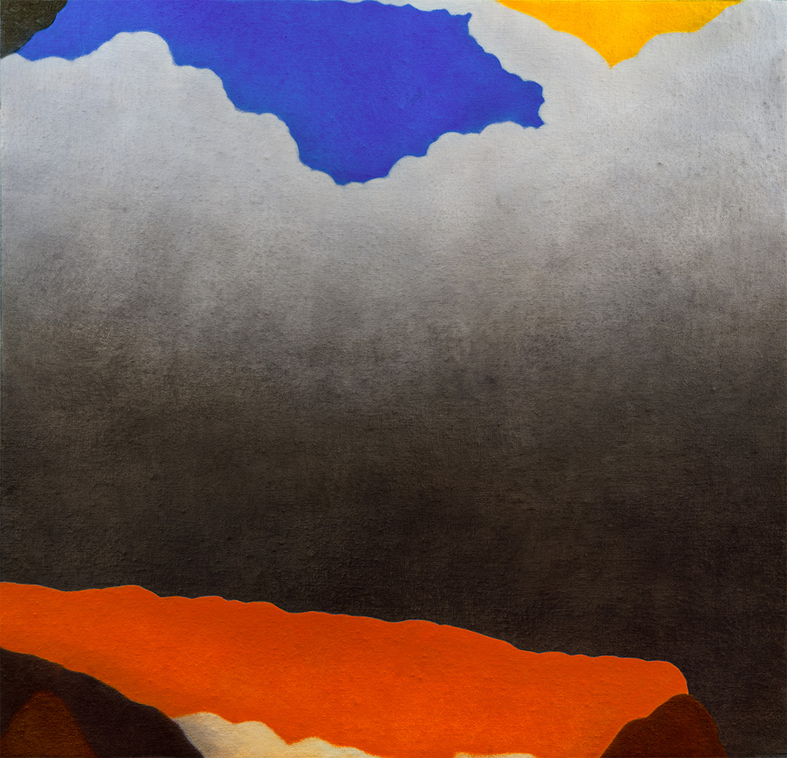
Original Painting
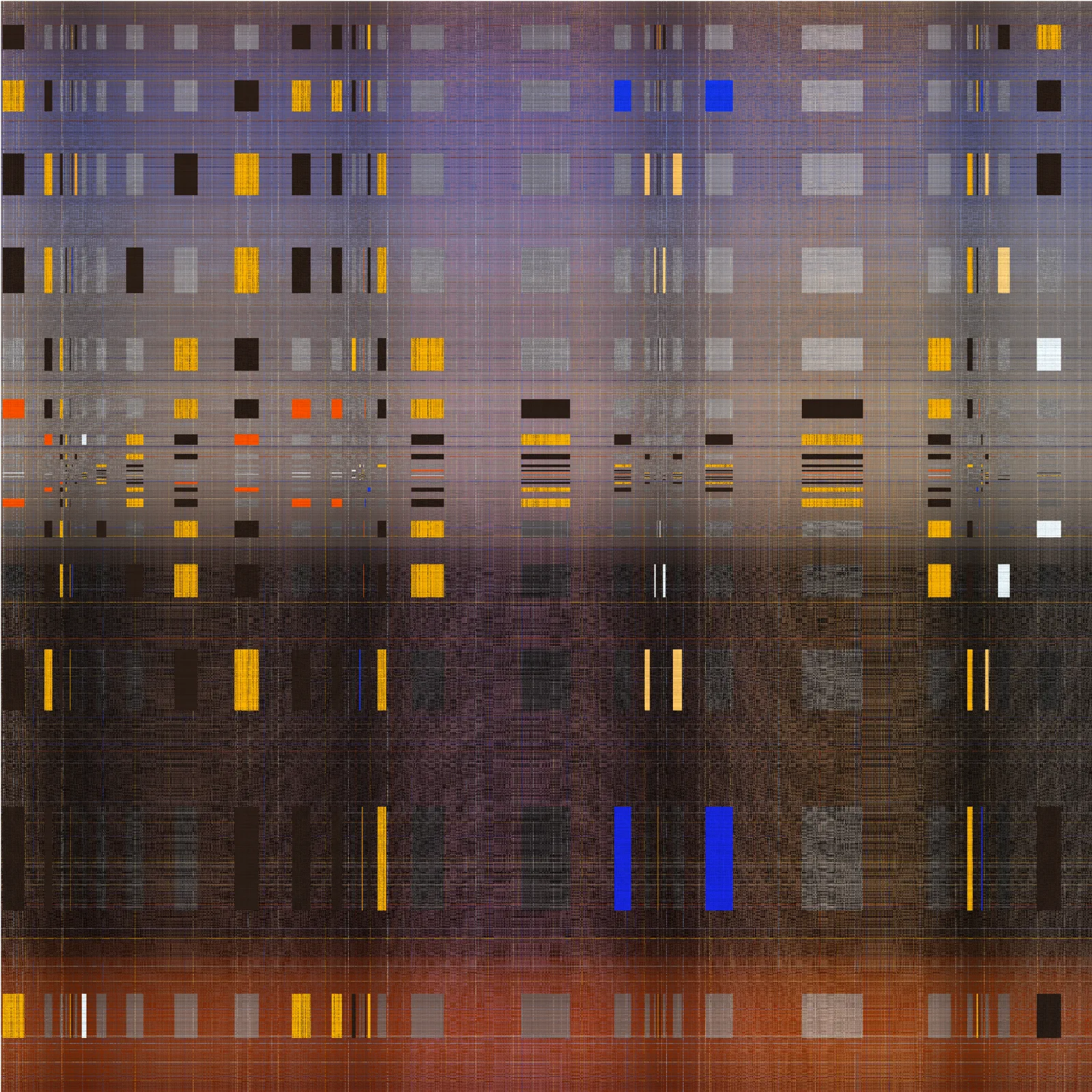
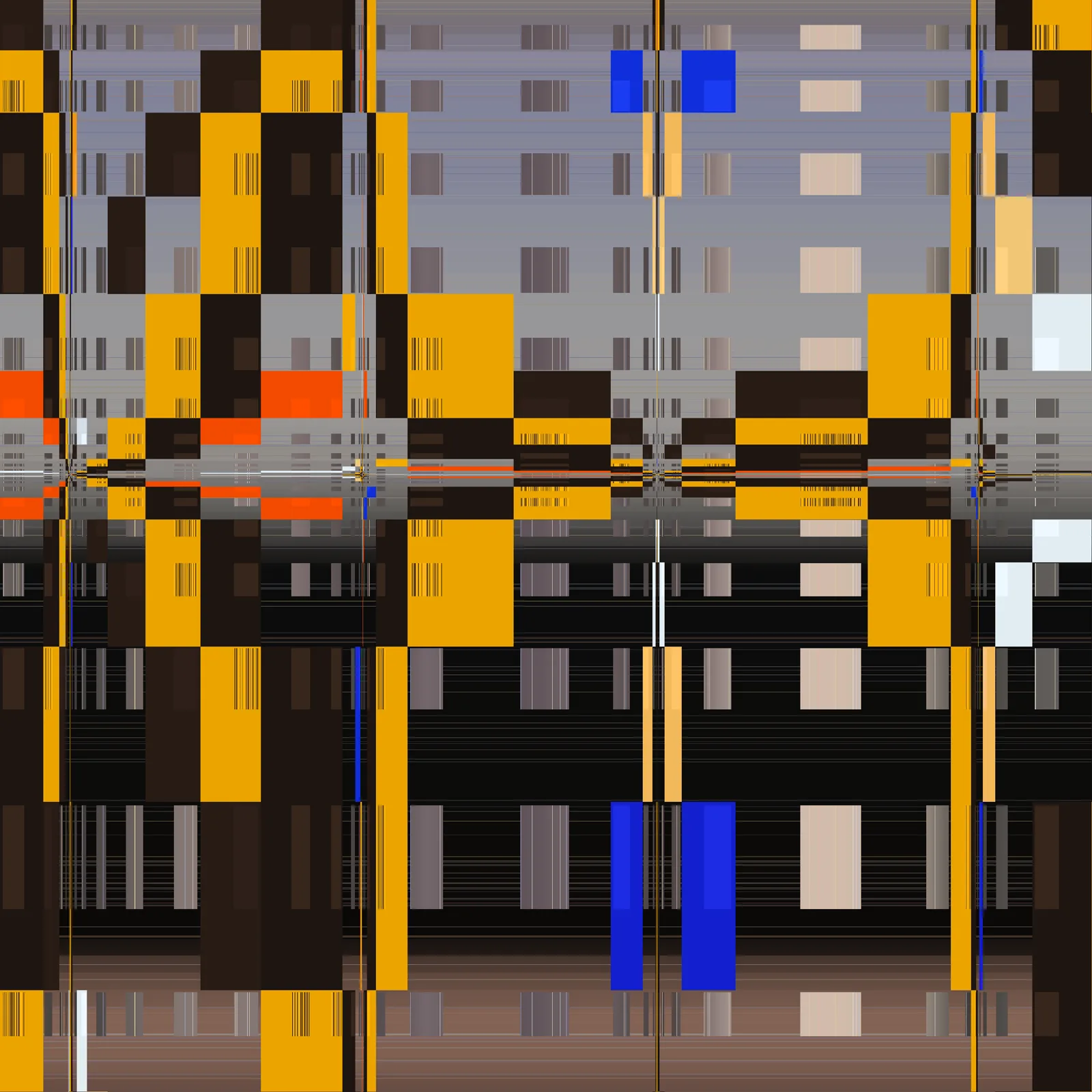
Woven Stenography
◀ WIPE ▶
WIPE COORDINATE 50% [THREAD]

What are the binary functions of style?

I became curious about the implicit systems I paint by, so I set out to understand my own paintings through the language of weaving. The tool reads a painting across many dimensions and scales and translates it into a complex weaving draft. The system is fully axiomatic, so anyone with the key can read it. It comes out of a longer interest in coordinate systems, language, and translation.

People picture weaving as a binary craft — threads up or threads down, an image flattened to a grid. Up close it is the opposite. Parallel threads cross in so many combinations that the dimension you can pull out of that binary grid is effectively endless: seams, depth, whole figures, all from over and under.

That is the part I keep circling. Binary systems are fruitful, and I am glad to dismantle the romantic idea that there is a genius in the artist's hand no computer could ever reach. I paint intuitively; this tool reads the painting back to me across many scales, and finds a real structure in it.

The drafts have a quality of polyvalence: one threading can produce wildly different patterns depending on how the shafts are raised. A single coordinate, many readings. The woven version is a decoding of the logic under a painting, the decisions I make without ever naming them.

Bibliography & Research

01 / ALBERS, ANNIOn Weaving (1965)
Thread is a constructive language; the weave is a grid of decisions, not decoration. In the work: the painting is decoded into threading, tie-up, and treadling.
02 / PLANT, SADIEZeros and Ones (1997)
The Jacquard loom was the first programmable machine; weaving and computation share an origin. In the work: painting, programming, and weaving come from one place.
03 / WHICHER, OLIVE & GEORGEProjective Geometry (1971)
Form is shaped by forces working inward from the periphery toward a centre. In the work: a painting's design line is projected into the shafts of the weave.
touches //
Room 10 / Poster Design System

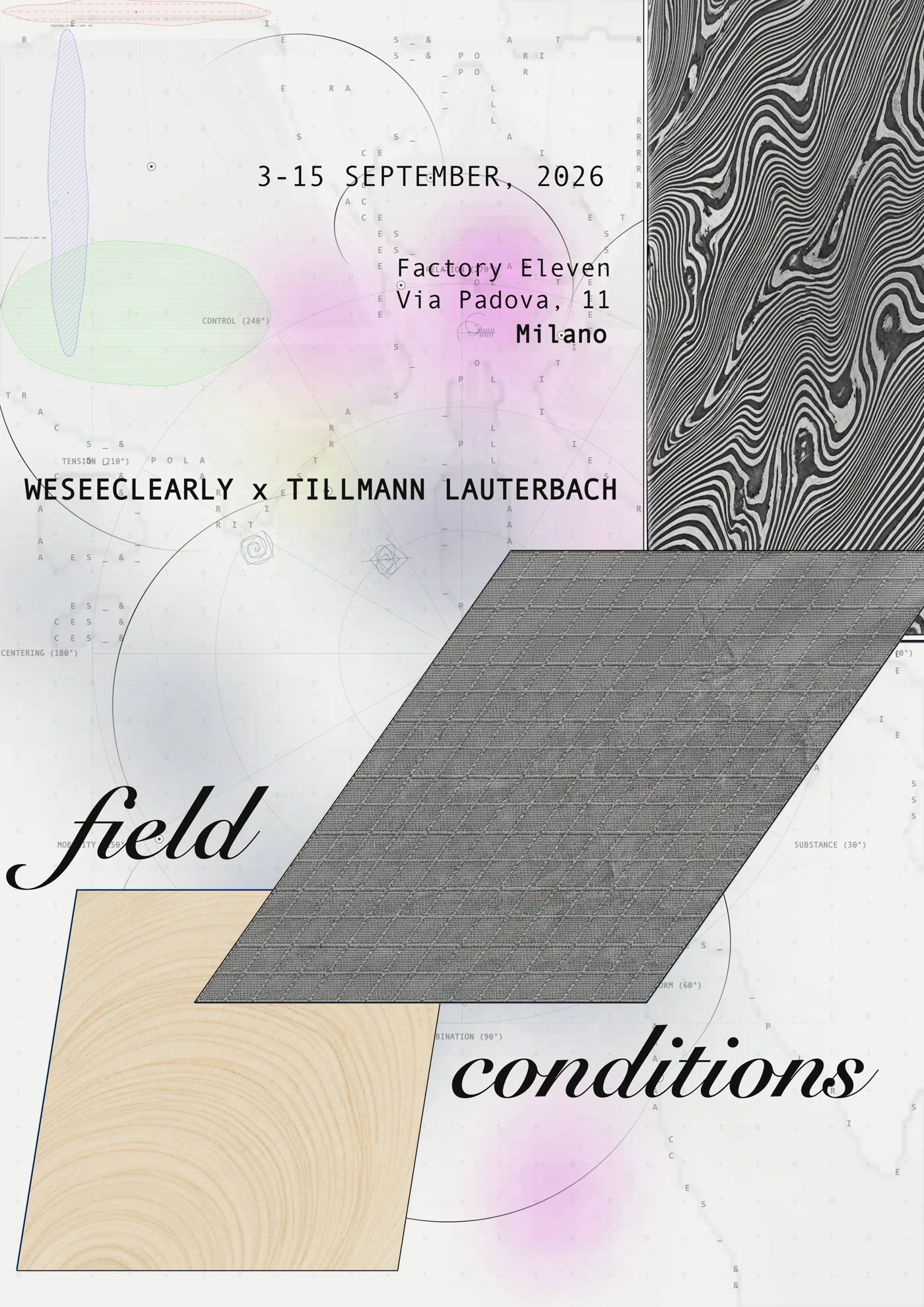
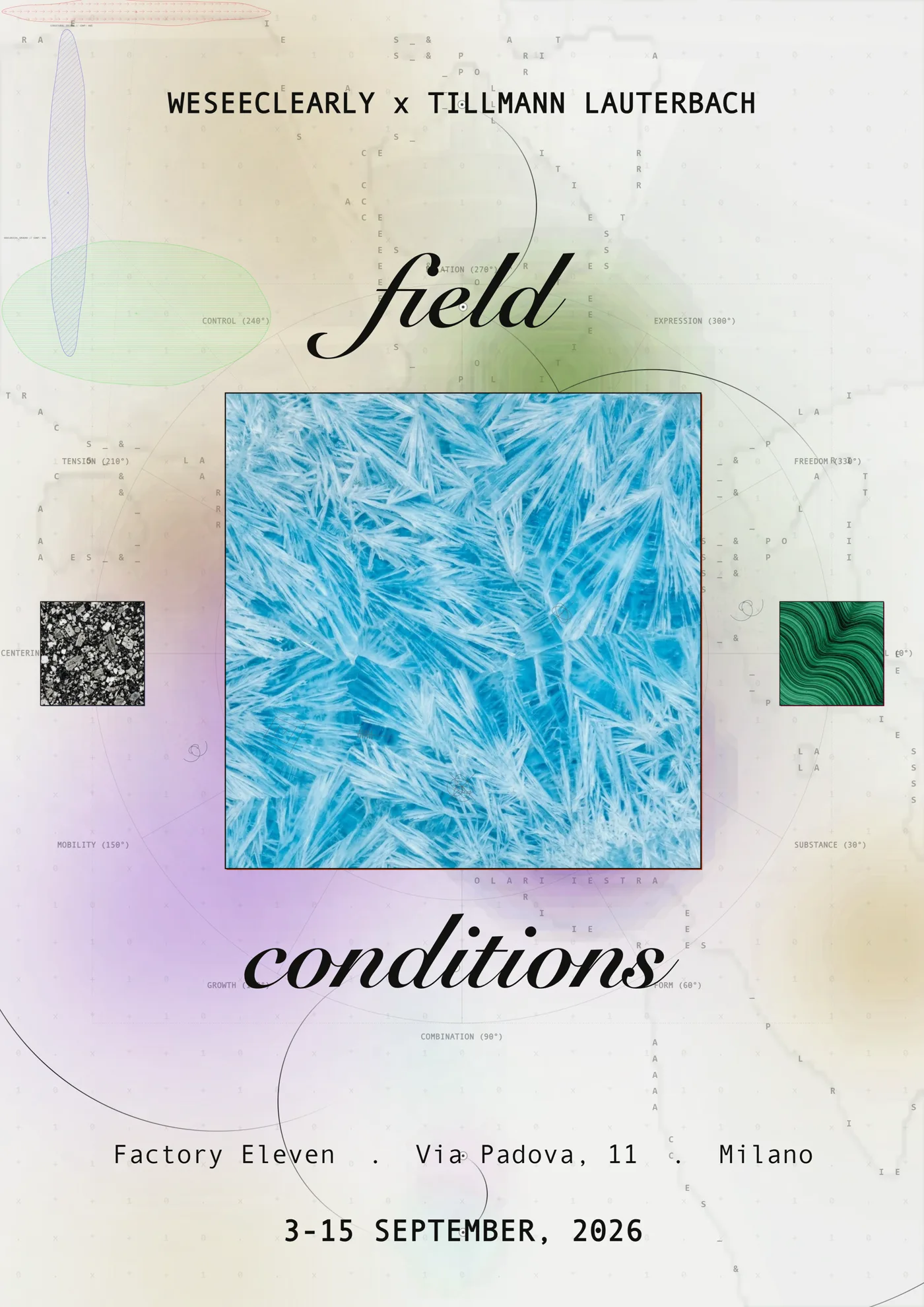
Field Conditions

LIFECYCLE //Deployed TIMELINE //2026

What if there were no designer, only conditions?

A procedural design toolkit. You set the field conditions — the forces at play across the page — and the elements read them and arrange themselves, pulled into place by that field as it shifts. Around it runs a quieter layer that stays tuned to your own rhythms while you work: your breath, your heartbeat, where your eyes move, the slower cosmic cycles underneath. It keeps the making grounded in your body, so the design comes from real conditions instead of arrangement for its own sake.

Most design is the work of arranging elements in aesthetic relation, nudging one against another until it looks right. This tool moves that work earlier. You set the conditions, the forces at play across the page, and the arrangement emerges from that array on its own.

I also built a frame around the tool that keeps me tied to my own rhythms while I work: my breathing, my heartbeat, the haptic rhythm of my hands as they move, where my eyes go, and the slower cosmic cycles underneath all of it. I hate getting lost in the arbitrariness of pushing things around, and the frame keeps me from drifting there.

Bibliography & Research

01 / ALLEN, STANField Conditions (1997)
Form can emerge from local rules and relationships rather than an imposed plan — the whole arises from the parts and their field. In the work: elements arrange themselves by attraction, not by hand.
02 / SHELDRAKE, RUPERTA New Science of Life (1981)
Morphogenetic fields guide how form takes shape. In the work: a morphogenetic grid that does the placing, an energetic blueprint beneath the surface.
03 / GERSTNER, KARLDesigning Programmes (1964)
Design the system that generates the design, not the single outcome. In the work: aesthetic arrangement arising from a tuned field instead of manual placement.
touches //
├── Sub-Room 10.1 / Orienting Presence

The Seated Creator

LIFECYCLE //In Development TIMELINE //2026 (Ongoing)

An orienting device that sits outside the canvas while I work. The seated creator breathes on a five-second coherent cycle and carries a sixty-beat heartbeat, a reminder that there is a presence here connected to breath and to the stars. It is the first prototype of a recurring character: a reflection of the self that I want to thread through every project as a circadian, inner-rhythmic line.

HEART_PACE 60_BPM BREATH_PACE 5.5s_COHERENT 05_EVOLVE 04_EVALUATE 03_PROTOTYPE 02_SCHEMATIC 01_RESEARCH

A Presence Outside The Machine

The figure is the first prototype of a recurring character I am developing, one that will live across all my work and become a kind of digital double. Not the double that pulls you into the screen, but one that reminds you of your own aliveness while you work.

The heart beats sixty times a minute. The halo breathes at a slow, parasympathetic rate, the kind that settles the nervous system. It is built as a self-contained component, ready to reuse in other projects and, in time, to open-source so others can carry their own presence with them.

touches //
├── Sub-Room 10.2 / Watching & Touching

The Eyes & The Hands

LIFECYCLE //In Development TIMELINE //2026 (Ongoing)

The other two orienting devices that frame the canvas. A pair of Kathmandu wisdom eyes that watch and blink, and a pair of bagua hands that carry the haptic feedback of the work, their knuckles laid out as a Lo Shu magic square. Like the seated creator, they are built to travel: self-contained components that keep the act of making attended-to and embodied.

OPTIC // WATCHING HAPTIC // TOUCHING 492 357 816 492 357 816

Watching, And Holding

The eyes follow the cursor and blink on the same slow cadence as the creator's breath.

The hands show when mouse interactions happen. One reads your gesture coming in, the other tracks motion going out. The squares on the knuckles hold a grid of numbers that balances in every direction.

Each is built as its own portable component.

touches //
└── Sub-Room 10.3 / Morphogenetic Grid

The Field Engine

LIFECYCLE //In Development TIMELINE //2026 (Ongoing)

The engine underneath Field Conditions. Two grid families, Cartesian or isometric, act as fields of attraction. Every point is drawn toward the nearest lane with a nonlinear force, stretched along the corridor it joins and squeezed across it, so elements gather at the nodes and intersections where the fields cross.

MORPHOGENETIC GRID DISTORTION FIELD // PLACEMENT BY FORCE LANE SUCTION NODE @ INTERSECTION ML BLOB TRACKING → SEEDS PLACEMENT IMAGE COCO-SSD TensorFlow.js BLOB

A Living Grid

This takes the ordinary design grid and gives it physical force. Elements snap toward the lines, and they also get pulled, drawn in by a field rather than locked to a fixed position. You can turn the strength of that force up or down, from a firm hold to a loose, drifting attraction.

At full strength it behaves like a real environment. Elements pull toward each other and push apart, reacting to the gradients and the text around them, settling at the crossings where forces meet. It feels like moving through a world rather than filling in a prison of cells.

Images you bring in are read for what they contain, so the field can place them by their content. The finished page exports as clean vector and as a print-resolution poster.

touches //
Redirect

Self OS

LIFECYCLE //In Development TIMELINE //2025 (Ongoing)
Maya · 5-day streak Kai · 12 in a row Noor kept the streak Theo · streak of 9 Amara followed through
Who's with me? // here right now

What if friction is one side of freedom?

A Chrome extension that reroutes your attention toward a shared presence online, and back toward what tends to slip down the list: creative projects, and whatever lives in a different headspace from your task list. At set moments it steps into the scroll and hands you something small and physical to do, so your attention has somewhere better to land. It is also an experiment in collective presence, being aware of one another as quiet witnesses, present in the same moment.

Grounding focus in mechanical routine, reclaiming attention through shared presence.
⛶ Focus Reader

Most of the interfaces we live inside are built to extract: frictionless paths that keep you scrolling, attention harvested and sold. Self OS starts by putting friction back. At scheduled moments it breaks the passive loop and hands you a small, physical thing to do, below the threshold where decision fatigue sets in.

The deeper move is to reroute the energy that gets reclaimed. The same interface mechanics that usually drain us can be rebuilt as interfaces we make for each other: tools for exploration, for grounding, for presence. Self OS is my first attempt at that inversion, taking the shape of the thing that extracts from you and using it to give energy back.

It also holds a quieter question about being together. Rather than the tribes that algorithmic grouping sorts us into, what if we were simply aware of one another as witnesses, present in the same moment?

Bibliography & Research

01 / GURDJIEFF, G. I.In Search of the Miraculous — the Law of Three (Ouspensky, 1949)
A mechanical habit is a passive process that keeps the observer asleep; it takes a denying force to break it. In the work: selfOS is that denying force, a scheduled interrupter that shocks attention back into presence.
02 / SKINNER, B. F.Schedules of Reinforcement (1957)
Variable rewards on a frictionless lever produce the most compulsive behavior — the logic of the infinite scroll. In the work: deliberate friction breaks the variable-reward loop.
03 / TURRELL, JAMESLight and Space (Ganzfeld works)
Slow, enveloping light returns perception to itself. In the work: the Presence Chamber's breathing colour fields, light apertures rather than content.
touches //
├── Sub-Room 07.1 / The Roulette Wheel

The Roulette Wheel

LIFECYCLE //In Development TIMELINE //2026 (Ongoing)
Troubadour
Architect
Ninja
2/4 H/O
Magus
Figure 07.1 / Conic Decision Wheel

Hand It to the Wheel

When a Self OS block kicks in, this wheel is the first thing you see, the centre of the extension. It makes the decisions that go unmade on their own. Creative tasks live in a different space from a task list, one without hierarchy, so they slip past the things that get prioritized. I pre-curate the things I actually want to do, then hand the choice to the wheel: spin it and do what it lands on. Outsourcing that single decision quietly interrupts the workflow I would otherwise stay stuck in, and it has changed how I spend my time.

⛶ Focus Reader

Friction is the primary mechanism of extraction. Modern interfaces are engineered to route our focus into loops of passive consumption, exploiting the cognitive gap we experience when switching between tasks. selfOS is built as a deliberate, mechanical counterweight. It introduces a physical interruption at a threshold below biological friction, bypassing decision-fatigue by selecting our micro-prioritizations for us.

Bibliography & Research

01 / IYENGAR & LEPPERWhen Choice is Demotivating (2000)
Too many options erode the will to choose at all. In the work: the wheel removes the choice so the routine just happens.
02 / JAMES, WILLIAMHabit — Principles of Psychology (1890)
Habit offloads decisions so attention is freed for what matters. In the work: micro-prioritizations automated below the threshold of active choice.
touches //
└── Sub-Room 07.2 / The Presence Chamber

The Presence Chamber

LIFECYCLE //Complete TIMELINE //2025
Figure 07.2 / Synchronous Presence Chamber

Who's With Me

It connects you with other people who, in the same moment, are taking active control of their attention and rerouting it toward what they actually care about. An experiment in collective presence and witnessing: the quiet knowledge that others are here, doing the same work. It appears at the end of every blocking session.

⛶ Focus Reader

When the session starts, the interface answers the simple question: Who's with me? It renders a quiet, non-social count of other seekers showing up in the same moment. At milestones, synchronous celestial shooting stars and comets sweep across the screens of all active participants. It is collective presence without social clumping—attention reclaimed as a shared, silent tapestry rather than a private extraction.

Bibliography & Research

01 / TURRELL, JAMESLight and Space
Slow, enveloping light returns perception to itself. In the work: the browser becomes a breathing field of colour, not a dashboard.
02 / TURKLE, SHERRYAlone Together (2011)
We seek connection without the demands of contact. In the work: a quiet, non-social count of others present in the same moment.
touches //
Polarity

Counterspace

LIFECYCLE //In Development TIMELINE //2025 (Ongoing)

What if position is only a matter of perspective?

A visualizer for projective geometry, a system where everything is defined by its relationships rather than absolute measurements. I have also been mapping it onto a room, where each person becomes an origin point and the distances between them play directly as sound. The room itself becomes the instrument, sounding from where people stand and how they relate, a quiet ambience in the space that you come to notice your own part in over time.

⛶ Focus Reader

Projective geometry has no fixed coordinates and no absolute values. Everything is defined by relationship, by polarity, by how a form sits against the space around it. Each person is their own origin point.

Every form carries a network of formative forces that brought it into being, working inward from the periphery toward the center: counterspace, polar forms, the horizon as a line at infinity. The periphery does as much of the shaping as the center.

Spatial translation and musical transposition are the same operation. The coordinate that moves a point through space moves a pitch through a scale.

I built this visualizer because so few do projective geometry justice, and because emergent complexity, music, and harmony have held my attention for years. The next step is a room where people themselves are the points, their positions and movement playing the geometry as sound.

The Instrument

How It Works Stable
Engine Core: Three.js WebGL // P² Homogeneous Matrices
Audio Synth: Web Audio API Polyphonic Oscillator Deck
Spatial Spacing: ratio ** (i + bias) // Microtonal Scale
Pitch Translation: ratio ** ss // Chromatic Pitch Shift
Axiom Proofs: Pascal Line Hexagram // Desargues Collinearity
Dependencies: THREE.OrthographicCamera // THREE.Raycaster
In development. The room version comes next.

Bibliography & Research

01 / WHICHER, GEORGE
The Projective Geometry of Organic Form (1989)
02 / EDWARDS, LAWRENCE
The Vortex of Life (1993)
03 / WILSON, ERV
Logarithmic Scale Architectures
04 / THOMAS, NICK
Science Between Space & Counterspace
05 / LEHRS, ERNST
Man or Matter (1951)
touches //
Generative Portraits

Interfacers

LIFECYCLE //Complete TIMELINE //2025
A generated interface portrait GEN // PROCEDURAL

What if every face is for entering?

Every portrait is assembled from the parts of an interface, and somewhere in the arrangement a face appears, eyes and a nose and a mouth, a presence looking back. It plays on a hallucination we are wired for, the same reflex that finds a face in a cloud or an outlet. The identity is half the components and half you.

It is also where a looser aesthetic for my work opens up, built on finding order inside randomness and on how readily we come to identify with something far from a face. A generative PFP for Interfacing, with endless variation, releasing likely in 2026.

— coming later —

Bibliography & Research

01 / TURKLE, SHERRYLife on the Screen (1995)
Identity becomes something we construct and perform through the interface. In the work: a face assembled entirely from interface parts.
02 / HARAWAY, DONNAA Cyborg Manifesto (1985)
The line between human and machine dissolves; we are already hybrids. In the work: a presence that looks back out of pure interface.
03 / MANOVICH, LEVThe Language of New Media (2001)
The conventions of software become a cultural interface, our shared visual grammar. In the work: faces built from panels, nodes, scan lines, the things we look at all day.
touches //
Surfacing

Studio Weseeclearly

LIFECYCLE //Deployed TIMELINE //2026 LIVE //weseeclearly.com ↗

Why do artists’ websites feel like dead storage?

I architected a new site for my paintings, synced to Notion and built as nested windows with no menu and no sequential order. Every painting is an axis you can move through; nothing is curated for you. It's nonlinear and exploratory, an archive you play through by dynamic association rather than fixed sequences or categories.

The structure itself is the manifesto.
⛶ Focus Reader

I rebuilt the site for my paintings, which go back to 2007, from the ground up.

The site is synced to my Notion database, so it stays current without my touching it, and the interface is built as nested windows. There is no sequence and no time order. Every painting carries its own coordinates, its date and palette and price and whether it is available, and each of those is a way in. You move through the work by association, through whatever pulls you.

The structure itself carries the meaning. A nonlinear site can still be coherent, and it keeps the work in motion.

Bibliography & Research

01 / WU, TIMThe Attention Merchants (2016)
The modern web runs on harvesting attention and reselling it. In the work: this site is built as a counter-friction network, a place to navigate mindfully rather than scroll.
02 / WEISER, M. & BROWN, J. S.The Coming Age of Calm Technology (1996)
Technology can sit at the edge of attention and move to the center only when needed. In the work: a rigid coordinate structure so the presence within it can breathe.
03 / ALEXANDER, CHRISTOPHERA Pattern Language (1977)
Space gains life from a coherent structure of relationships, not from decoration. In the work: the catalog is a directory tree of rooms; the structure is the argument.
touches //
Threshold

Interfacing

LIFECYCLE //Launched TIMELINE //2026 (Ongoing) LIVE //interfac.ing ↗
04 // SELF OS Somatic Grounding 60_BPM // 5.5s_BREATH
03 // ARTIFACT (TO TAKE) To Take PHYSICAL_OBJECT // BOUTIQUE
02 // ESSAY (TO TURN) To Turn NEWSLETTER // PHILOSOPHY
01 // TOOL (THE TOUCH) The Touch UTILITY_APP // GENERATIVE

What is hidden underneath a brand?

Interfacing is a tripolar architecture for releasing work. Most brands collapse toward the same entropy, which shows up as creeping humanitarian abuse, opacity, or a loss of quality hidden under a consistent surface. I am re-architecting what a brand can be as a tensegrity, where nothing rests on one visual style and every part stays in balance and relation, so the integrity runs all the way through.

“From brand to release” is the first drop from Interfacing, and my current main focus.
⛶ Focus Reader

Interfacing is an unusual word. As a verb it is the act of two systems meeting, a threshold in motion. As a thing it is the support sewn invisibly inside a garment, the layer that holds the shape of what is on the surface without ever taking the attention. I chose it as a name because it already carries its own polarity, the meeting and the quiet support held in one word.

For a long time a handful of companies built the interfaces and the rest of us lived inside them, taking whatever shape we were handed. That is changing. We can build our own now, on top of our own data, and the interface itself becomes something you make.

I didn't set out to make a brand. I wanted to move away from the assumption that you have to build one at all. This is Interfacing: work that puts something in motion and asks real questions about what forms us and where we differ, without ever telling you who to be. Why a brand, and not a release?

Everything under Interfacing arrives as three things at once: an essay, a tool, and an artifact, holding each other up like a tensegrity. The structure inverts what you expect from a brand. There is no central store, no homepage that everything points back to. Interfacing rides as a footer on every release, and each release gets its own domain and its own design.

Interfacing is my main project, and most of my work from here will be released under it.

Bibliography & Research

01 / HOOKWAY, BRANDENInterface (2014)
The interface is a threshold and a relation, the zone where two systems meet and act on each other. In the work: Interfacing treats the interface as the thing you make, not the thing handed to you.
02 / FULLER, R. BUCKMINSTERSynergetics — Tensegrity (1975)
Tensegrity holds its shape through distributed tension, with no single member carrying the load alone. In the work: essay, tool, and artifact hold each other up; remove one and the release loses its structure.
03 / SIMONDON, GILBERTOn the Mode of Existence of Technical Objects (1958)
Technical objects individuate and evolve; they carry a way of being, not only a function. In the work: a release puts something in motion and asks a question instead of handing you an identity to wear.
touches //
├── Sub-Room 04.2 / Perspective Reveal

Logo Development

LIFECYCLE //Deployed TIMELINE //2026
+X
-X
+Y
-Y
+Z
-Z
[LOGO_RIG_TELEMETRY]
CAMERA_Y_ROT: 180°
Z_SEPARATION: 80px [STATIC]
PROJ_OVERLAP: 33% [MAX]
PROJ_STATUS: INTERPENETRATION_ILLUSION

Depending on Perspective

Depending on your perspective: a Venn diagram, an intersection of two circles, or a rotation around two circles that never actually meet. That dependence on perspective, and the fluidity of interpretation it opens, runs through every part of Interfacing.

SIMULATION ANGLE (ROT_Y) 180°
CHOOSE VIEWPORT ASPECT

What happens when we collapse dimensions? From a fixed, flat perspective, two circles moving in three-dimensional space appear to slide across one another, creating an intersection—a Venn diagram of overlapping zones. We read this overlap as connection, or even friction.

"Circles maintain their integrity and independence; they never interpenetrate. Collapsing down from dimensions creates intersections that do not exist."

But if we orbit the camera and slide the perspective to the side, the depth coordinate is revealed. The circles never touched. They occupy completely separate vertical coordinates along the Z-axis, rotating statically in their own planes. The intersection was a flat illusion, an artifact of dimensional collapse. This serves as a physical metaphor for modern digital echo-chambers: we collapse multi-dimensional richness into flat, binary profiles, constructing artificial conflicts that only exist because of the flat angle from which we look.

Simulation Switches

SHOW 3D DEPTH GUIDELINES
SHOW 3D GRID & AXES
AUTO CAMERA ORBIT

Engine: Three-dimensional homogenous skew coordinates. Calculates dynamic trigonometric projection coefficients.

touches //
└── Sub-Room 04.3 / Edition Cipher

Everything is Unique

LIFECYCLE //Deployed TIMELINE //2026

A deterministic digital stamp signature generator. Using ancient **Lo Shu mathematical grids**, edition numbers are spiral-filled and shifted based on unique seed multipliers, creating a distinct, unrepeatable visual watermark for physical items.

0
0
0
0
0
0
0
0
0
0
0
0
0
0
0
0
0
0
[EXPLODED_STAMP_PROJECTION]

One Registry

Every Interfacing drop is one of one. Each is translated into a magic square, a unique identifier inside a single registry that holds the whole Interfacing universe. It is a non-linear cipher, where meaning comes from your relationship to the grid rather than a place in any sequence.

EDITION NUMBER Nº 001

Lo Shu Magic Squares

The ancient Lo Shu magic square represents one of the earliest examples of deterministic harmony. Every row, column, and diagonal sums to fifteen—establishing a weightless lattice of numerical equilibrium. When we map this ancient lattice to digital editions, we create a spatial signature that is unrepeatable yet completely deterministic.

"Watermarks are not arbitrary database indices; they are topological transformations of sequence numbers directly onto physical coordinate space."

By printing these mathematical ciphers onto physical works, we link digital authenticity directly to sequence without relying on heavy external databases. It is a spatial correspondence, a circular return where math serves as a beautiful protective seal.

Technical Specifications

DETERMINISTIC CIPHER STEPS: [7] VERIFIED
GRID INTEGRITY (SUM = 15): ACTIVE
3D VIEWPORT PROJECTION: 60 FPS

Engine: Ancient magic square matrix offset with linear shift multipliers. Formulates an unrepeatable digital-physical watermark signature.

ID: Nº 001
MODE: SINGLE_ADDITION
KEY: [7] DET
STATUS: ANCHOR_ACTIVE
touches //
Room 05 / Somatic Resonance

Polar Shadow

LIFECYCLE //Complete TIMELINE //2025

A key V2 philosophy that connects the visitor's bodily presence to the site's digital current. Instead of encouraging endless mouse movement and cognitive depletion, the catalog incentives **contemplative stillness**. As you pause your cursor, the organic breathing glow blooms behind typography and lines, causing coordinates and letters to light up with spectral chromatic refraction.

hold.sonifold.interfac.ing (V2 Mirror)
FROM SYNTAX TO SIGNAL· FROM SYNTAX TO SIGNAL·
PRIMARY_HUD_ANCHOR
POLAR_SHADOW_HUD (WAYFINDING MIRROR)

A Polar Form

A polar form and an inversion: more of the philosophy behind Interfacing, set into its design. Interfacing travels as a footer on every release rather than a header or a homepage, so components like this one carry the meaning, each a quiet signal that everything belongs to the same universe.

The Polar Shadow of Attention

Extractive networks treat your attention as an active ore to be mined. They incentivize endless clicks, rapid scrolls, and constant mouse displacement. The browser becomes a somatic stress chamber.

"Somatic Stillness is the polar shadow of that extraction: it is attention reclaimed through absolute physical quietude."

When you halt all physical cursor movements, the interface signals a change of state. It ceases to update coordinate grids with mechanical vectors and instead yields to a slow, breathing biological light loop. By standing still, you become conscious of the interface as a mirroring envelope—a synchronous space where presence is defined by your capacity to rest.

Sensor Variables

Sensor HUD Sys_Idle
Cursor Idle Trigger: 1.20 Seconds
Spectral Gradient: Dual Complementary Ghost Pairs
Interaction Level: Continuous Mousemove Intercepts
CSS Variables Bind: --stillness-x // --ghost-color

Philosophy: Reclaiming agency from extractive networks by mapping stable biological resting rhythms to programmatic CSS apertures.

touches //
Mirror

Sonifold

LIFECYCLE //Launched TIMELINE //2025 - 2026 LIVE //sonifold.interfac.ing ↗
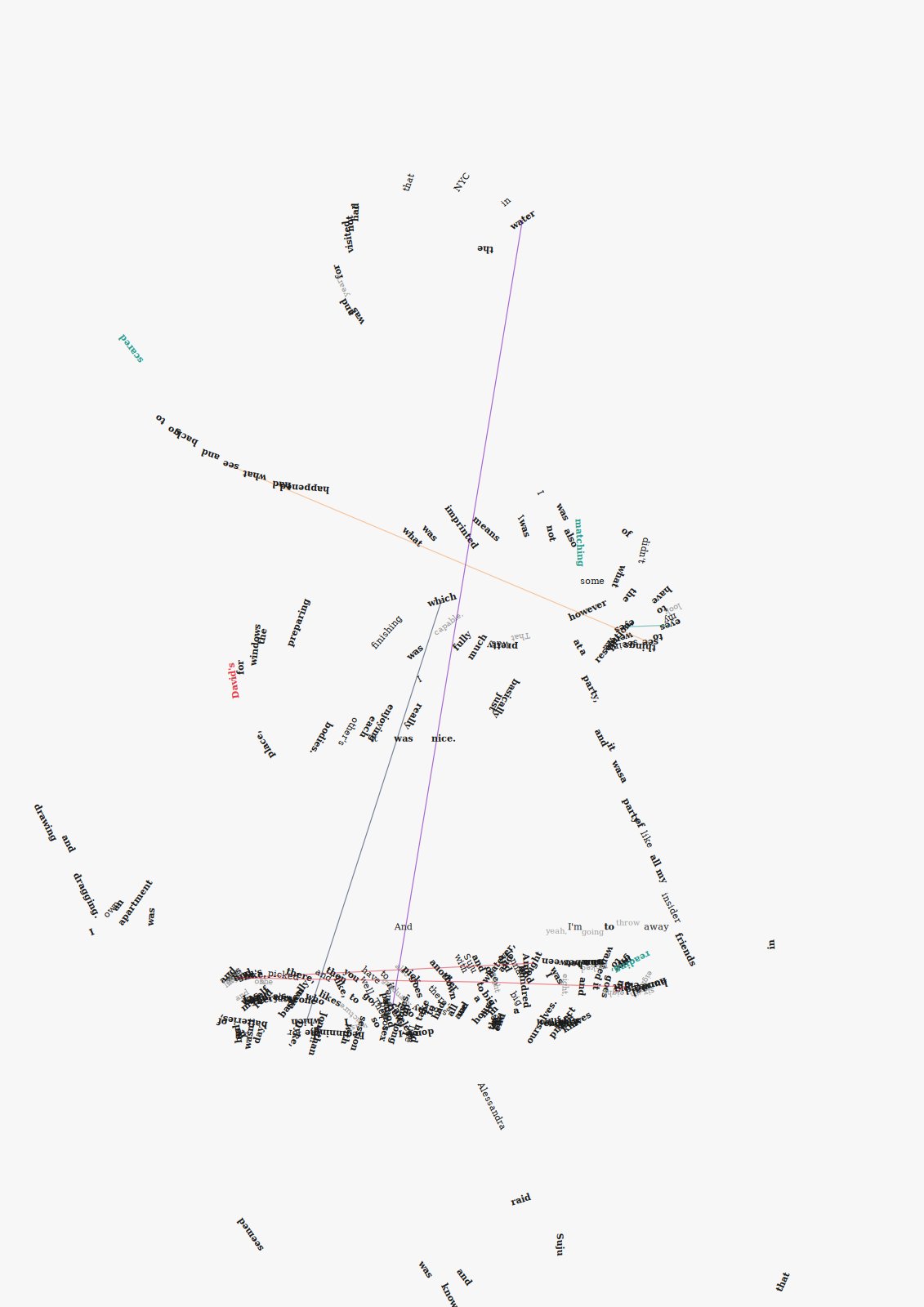
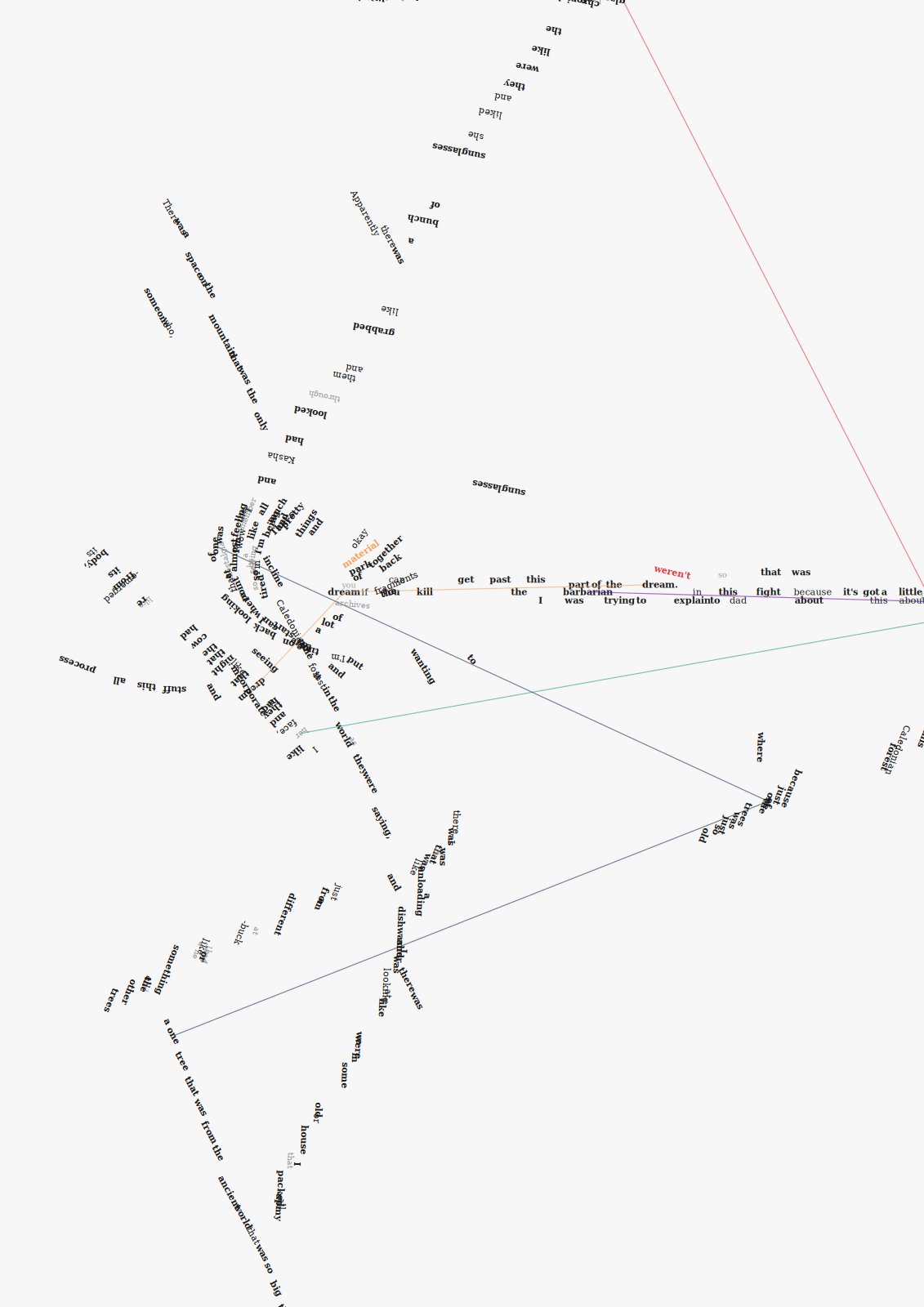
SPEECH MORPH SLIDER 0% Spoken Words

What does your voice know that you don't?

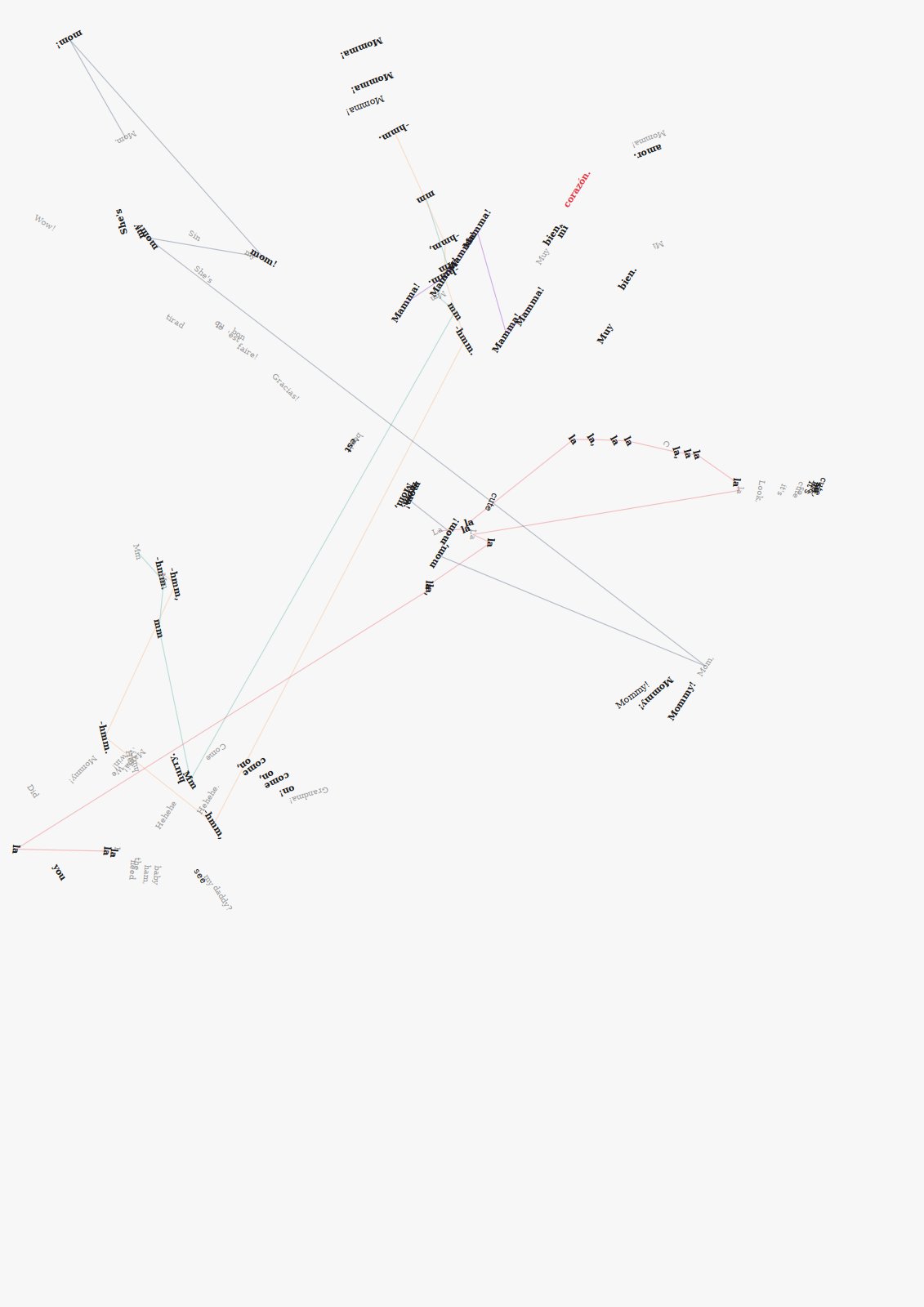
Upload a voice note and it maps how you said it — your timing, your pauses, and the words you kept returning to — as a shape you can see.

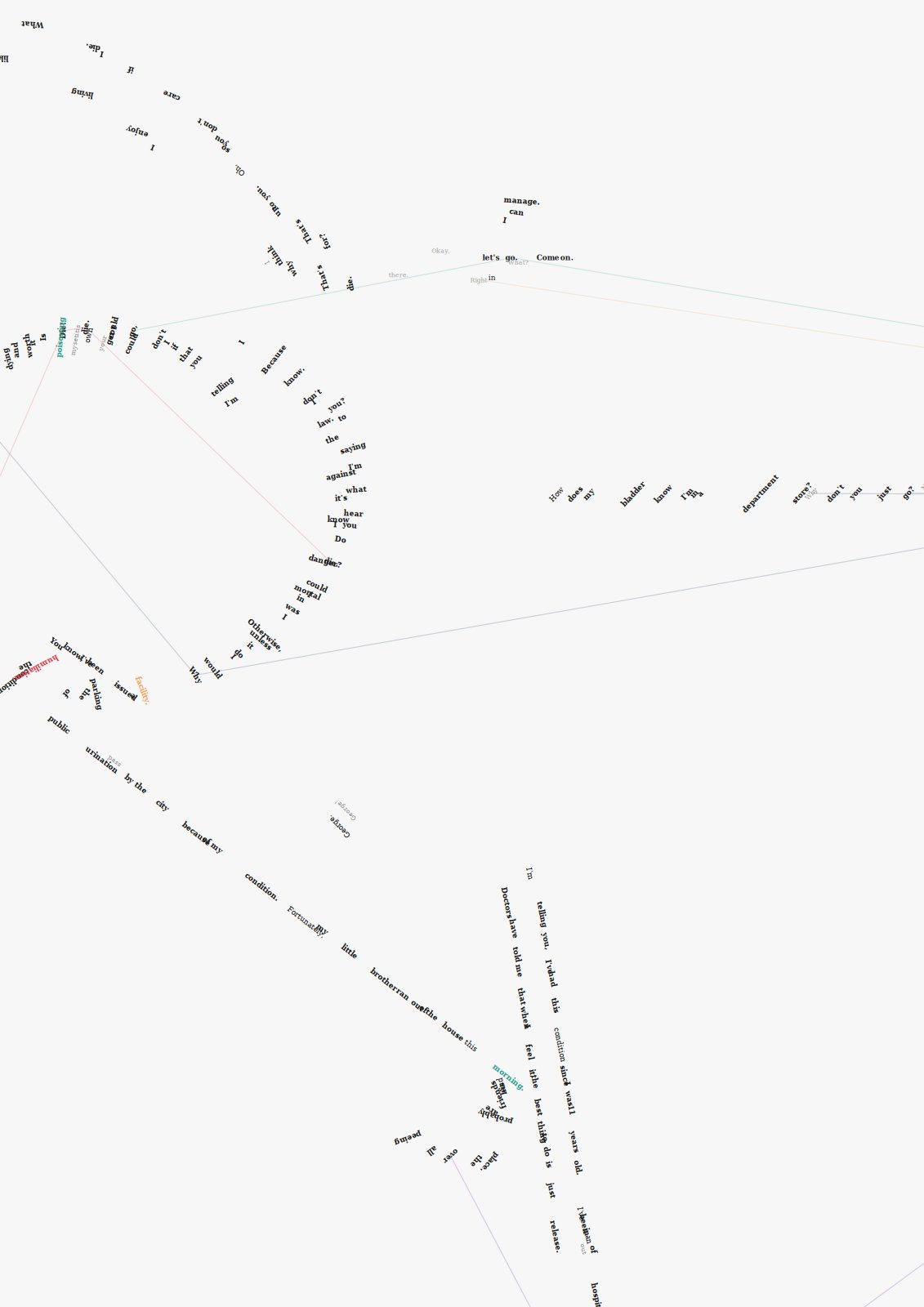
What shapes does a spoken voice take? You upload a voice note—a message to a friend, a paragraph read aloud, something said while driving. This tool transcribes it, then uses the timestamp on every word to place it in space. Pause becomes distance, speed becomes density, and every cluster of silence is a coordinate. Each word lands precisely where it does because of when it arrived. The result is a 2D map, a spatial typography of speech. A sonifold.

"A transcript preserves what you said. The sonifold preserves how."

Shape carries what the words don't: where you circled back, where you accelerated, which phrases your speech kept returning to. Repeated words connect across the canvas as colored threads, and immediately you can see the loops. A topology of a voice, where the map is the meaning.

Adjustable parameters let you influence what emerges. Tune the sensitivity to silence and the pauses open like rooms. Rushed passages compress into constellations. The architecture comes from the voice; the image comes from the conversation between the voice and the choices you make. Which is why there's always an interactive component to every Interfacing release, one that produces artifacts you can take with you.

The voice you upload doesn't have to be yours. The tool reads rhythm, density, silence, speed, indifferent to your reason for choosing. What arrives is the geometry of how someone moves through language, stripped of meaning, rendered as form.

Bibliography & Research

01 / DOLAR, MLADENA Voice and Nothing More (2006)
"The voice is the instrument, the vehicle, the medium, and the meaning is the goal; voice appears as materiality opposed to the ideality of meaning." In the work: the sonifold renders only the materiality, the timing and rhythm and trajectory of sound, setting meaning aside to show the structure underneath.
02 / LABELLE, BRANDONAcoustic Territories (2010)
"Sound violates the border, and in that sense it may show us how to live as a border, a threshold, always in touch." In the work: the map makes that threshold visible, turning continuous acoustic waves into a discrete spatial topography.
touches //
Room 09 / Cosmic Botany

Cosmic Botany

LIFECYCLE //Complete TIMELINE //2024
MORPHOLOGY SHIFT 0% Planet Orbits
Figure 09.1 / Keplerian Leaf & Bud Rosette Simulator

Can a computer lead us back to nature?

An orbital simulator that maps the orbits of Earth and Venus onto the geometry of leaves and buds. It follows real research from the Steiner-school tradition, where bud forms were found to fit geometric path-curves that shift in rhythm with planetary cycles.

Going so far around the digital circle that we return to cosmic correspondence.
⛶ Focus Reader

We have obstructed our connection with natural cycles. Extractive structures—monolithic concrete buildings, asphalt pavements, and ubiquitous Wi-Fi signals—act as a sensory shield, isolating us from the primary rhythms of the earth and sky. Many point to this severance as our civilizational downfall.

Yet the digital represents an unexpected portal back. Because nature is not constructed of straight lines, its geometries are dynamic, curved, and relational. By pushing calculations to their outer limits, the mathematical visualizer returns us to the circle, allowing us to find form correspondences (homonyms) across cosmic and biological scales.

"The computer becomes a glass pane reflecting the macrocosmic order. The same mathematics that maps Venus's synodic year traces the contour of a budding leaf."

In this active research, the planetary orbits are mapped directly to microtonal chord ratios. Sliding the morphology control transitions the orbital vector lines into organic botanical profiles—revealing that the structural template of plant growth is a perfect spatial projection of celestial orbits. The computer is not a barrier to the cosmic; it is the loom upon which its threads are woven together.

Bibliography & Research

01 / EDWARDS, LAWRENCEThe Vortex of Life (1993)
Measured tens of thousands of leaf buds and found their profiles fit projective path-curves that shift in rhythm with lunar and planetary cycles. In the work: the orbits are mapped onto the geometry of the buds.
02 / ADAMS, G. & WHICHER, O.The Plant Between Sun and Earth (1982)
Develops the projective geometry of plant form held between the poles of sun and earth. In the work: the rosette sits between a celestial pole and an earthly one.
03 / EDWARDS, LAWRENCEProjective Geometry (1985)
The path-curve transformations used to model leaf and bud profiles. In the work: the geometry that actually draws the bud.
Planetary-biological homonym morphogenesis explorer.
Status: Active Research Project.
touches //
Room 08 / Cloud Embassy Website

Cloud Embassy Website

LIFECYCLE //Launched TIMELINE //2025

An container concept and architected space functioning as the neutral zone in a three-pole framework. In this mirror-world interface, real-world tasks and administrative metrics register as subtractions—clearing a dense, misty atmosphere toward geometric stillness.

DIRECTORY_TREE // CLOUD_CORE
[CLOUD_EMBASSY_ROOT]
└── Sub-Room 08.1: Sky-Break Volumetrics
└─ 3D WebGL stipple cloud coherence engine
SYSTEM: WEBGL // THREE_JS

Subtracted Atmosphere

Cloud Embassy is structured as a spatial website and wiki container. In this alchemical interface, real-world tasks function as direct meteorological subtractions. Tapping the expansion button below slides open the nested Sky-Break Volumetrics sub-room to reveal the performance-tuned Three.js particle system.

Throughline: Establishes a quiet, neutral static-markdown portal where human identities are not asserted, but subtracted into geometric space.
External Quartz Repository Launch Quartz Repository ↗
⛶ Focus Reader

The Neutral Zone

Drawing from Gurdjieff's Law of Three, Cloud Embassy functions as the neutralizing container—the place where the affirming self and denying digital environment dissolve into geometric stillness.

The static site uses the Quartz engine linked directly to my Obsidian database, mapping personal archives, drawings, and texts into a windswept cloud universe.

Cloud Specifications

Embassy System WIP
Conceptual Pole: The Neutral Container
Quartz Version: v4.1.0 Static Markdown Parser
Knowledge Engine: Obsidian Local Vault File Mapping
Interactive Breakout: Sky-Break Volumetrics (Sub-Room 08.1)
Static Site Scaffold: Active Staging.
Status: Upcoming Commission.
touches //
└── Sub-Room 08.1 / Sky-Break Volumetrics

Sky-Break Volumetrics

LIFECYCLE //Deployed TIMELINE //2025

The Three.js stipple cloud simulation system. Dragging the Sky-Break slider on the left organically parts the floating clouds to reveal the geometric coordinate grid behind.

COHERENCE SKY-BREAK SLIDER 0% Sky Break (Dense Clouds)

Subtracted Density

Cloud Embassy acts as a spatial container representing a mirror-world interface. Real-world commitments and life actions function as subtractions: pay a debt or clear a desk, and the environment subtracts a cloud. The digital canvas begins heavy, misty, and congested; as life is handled, the vapor sweeps away, clearing the atmosphere toward empty, geometric stillness.

Throughline: Creates a weightless formative container representing the self—translating the heavy burden of worldly densities into a clear, aesthetic canvas of radial geometry.
Obsidian Concept Node
Upcoming Commission // Vault v1.02
⛶ Focus Reader

Archival Mists

Under Gurdjieff's Law of Three, a structure is composed of three relational forces: the affirming protagonist, the denying environment, and the reconciling act of interfacing. Cloud Embassy is the neutral container—the place where these dynamics dissolve.

Drawing from primordial cloud cosmologies (the Islamic al-Ama and Zuni awonawilona) and high cloud-forest stone fortresses like Kuelap, the environment treats the digital screen as a literal meteorological atmosphere. The hand-drawn marks—dots, numbers, and fine ikat weaving drafts—represent the density of human weight.

"As mists part, we discover that the separation between protagonist and environment was an illusion. The observer merges with the cleared sky."

The interaction reproduces this subtractive geometry. By dragging your cursor, you sweep away the particulate layers, creating a local coherence break—a momentary clearing of the sky. In the parallel Internet, identity is not performed or broadcast; it is subtracted. Studio Weseeclearly disappears into the geometry, resolving the privacy wound by clearing away the surface noise to reveal the underlying silent matrix.

Embassy Vault

Embassy Metadata WIP
Conceptual Pole: The Environment // Reconciling Container
Obsidian Vault: Wiki-Linked Concept Mapping & MOC Anchors
Research Domains: al-Ama // awonawilona // enenra // ikat // kuelap
Subtractive Engine: Three.js Particle Drifting / Vector Sweeping
Three.js stipple rendering simulation engine.
Status: Upcoming Commission.

CV

Selected Exhibitions

Solo & Group

  • 2017Antarctic PavilionVenice Biennale, Venice
  • 2017Choose Your Own Adventure (solo)Galerie Thomas Fuchs, Stuttgart
  • 2016How To Let Go (solo)Magic Beans, Berlin
  • 2014Continental Shift (group)Saatchi Gallery, London
  • 2013Imago Mundi (group)Querini Stampalia, Venice Biennale — cur. Diego Cortez
  • 2013VOLTA NY (solo)New York
  • 2012Ecstatic Skin (solo)Envoy Enterprises, New York
Education & Residencies

Education

  • 2007–11New York UniversityGallatin, philosophy & creative writing
  • 2009Peking UniversityBeijing
  • 2006–07L'Institut CatholiqueParis

Residencies

  • 2017Alfred & Trafford Klots ProgramMICA, Léhon, France
  • GlitchGlitch ResidencyJoigny, France
Selected Work Experience

Roles

  • 2016Ai Weiwei studioResearch & production, Human Flow, Berlin
  • 2022–23BNVCreative Director, Singapore
  • 2020–23MetafactoryCore team lead
  • 2020NewcoinCultural Director
  • 2022DALL·E & MidjourneyBeta tester
Skills

What I Do

Garments & 3D
CLO3D Blender Pattern making
Creative code
TouchDesigner Processing D3.js
AI

Working with language models since GPT-1 in 2019. I currently teach and advise on how to use AI.

LLMs since GPT-1 DALL·E / Midjourney beta Agentic engineering Teaching & advising
Design software
Adobe Illustrator Adobe Photoshop Ableton
By hand
Violin Oil painting Sewing
COPIED TO CLIPBOARD